Introduction
If you’re starting Ozempic (semaglutide) — or considering it — you’ve probably heard about the side effects. And they’re real. But understanding what’s normal, what’s manageable, and what’s a red flag can make the difference between a successful treatment journey and giving up too soon.
This guide draws on peer-reviewed clinical trials, FDA adverse event data, and real patient experiences to give you the clearest picture available in 2026.
Medical Disclaimer: This article is for informational purposes only. Always consult your healthcare provider before starting, stopping, or changing any medication.
The Most Common Side Effects (and How to Handle Them)
1. Nausea — The #1 Complaint
Nausea affects 20-44% of Ozempic users in clinical trials, making it by far the most common side effect. The good news? It typically peaks during the first 4-8 weeks and decreases as your body adapts.
Why it happens: GLP-1 receptor agonists slow gastric emptying — food stays in your stomach longer. Combined with the drug’s effect on the brain’s nausea center, this creates the perfect storm for queasiness.
What helps:
- Eat smaller, more frequent meals — 5-6 small meals instead of 3 large ones
- Avoid high-fat foods — fat slows gastric emptying even more
- Stay hydrated — sip water throughout the day, not large amounts at once
- Ginger or peppermint tea — clinical evidence supports both for nausea relief
- Ask your doctor about timing — injecting at night (before sleep) can help you sleep through peak nausea
When to worry: If nausea is severe enough to prevent eating or drinking for 24+ hours, contact your doctor. Dehydration from persistent vomiting requires medical attention.
2. Diarrhea and Constipation
The gastrointestinal effects of Ozempic can swing both ways. About 8-30% of users report diarrhea, while 3-24% experience constipation.
Why the unpredictability? GLP-1 affects gut motility differently in different people. Some experience accelerated transit (diarrhea), while others get the slow-down effect (constipation) — and some alternate between both.
Management strategies:
- For diarrhea: Stay hydrated with electrolyte drinks. The BRAT diet (bananas, rice, applesauce, toast) can help in acute episodes.
- For constipation: Increase fiber gradually (too fast = more bloating). Psyllium husk (Metamucil) is effective. Aim for 25-30g fiber daily.
- Probiotics: Emerging evidence suggests probiotic supplementation may help regulate gut symptoms in GLP-1 users.
3. Fatigue — The Under-Discussed Effect
Many patients report significant fatigue, especially in the first weeks. While not always listed in the top side effects, real-world patient forums consistently rank fatigue among the top 3 complaints.
Possible causes:
- Reduced calorie intake (your body is adjusting to a deficit)
- Dehydration
- Blood sugar changes (if you have diabetes)
- Direct medication effect on the central nervous system
What to do:
- Don’t skip meals entirely — even if you’re not hungry, eat small, nutrient-dense meals
- Prioritize protein (aim for 1.2-1.6g per kg of body weight)
- B-complex vitamins may help (discuss with your doctor)
Serious Side Effects: What You Need to Know
4. Gallbladder Problems
Risk: Approximately 1.5-3% of users develop gallstones or gallbladder inflammation. This risk increases with rapid weight loss — which Ozempic can cause.
Warning signs:
- Severe pain in the upper right abdomen
- Pain that radiates to your back or right shoulder
- Nausea and vomiting (beyond the typical Ozempic nausea)
- Fever or chills
Prevention: Slower weight loss (1-2 lbs/week) reduces gallbladder risk. Some clinicians recommend ursodeoxycholic acid for high-risk patients — discuss this with your doctor.
5. Pancreatitis — Rare but Serious
Acute pancreatitis has been reported in GLP-1 users. The absolute risk is low (estimated at <0.3%), but it’s a medical emergency when it occurs.
Recognize the signs:
- Severe, persistent abdominal pain (often radiating to the back)
- Pain that worsens after eating
- Nausea and vomiting
- Rapid pulse
If you experience these symptoms, seek emergency medical care immediately.
6. Thyroid C-Cell Tumors — The Boxed Warning
Ozempic carries an FDA boxed warning for thyroid C-cell tumors, based on rodent studies. In humans, the actual risk appears to be extremely low.
Key facts:
- Medullary thyroid carcinoma (MTC) has been observed in rodents given semaglutide at high doses
- Human data from long-term studies has NOT shown a clear increase in MTC risk
- If you have a personal or family history of MTC or Multiple Endocrine Neoplasia syndrome type 2 (MEN2), Ozempic is contraindicated
Monitor for: A lump in the neck, hoarseness, trouble swallowing, or shortness of breath.
The “Ozempic Face” and Body Changes
Rapid weight loss can cause noticeable changes in facial appearance — what social media calls “Ozempic face”. This is not a direct drug effect but a consequence of facial fat loss.
What actually happens: When you lose weight quickly, you lose subcutaneous fat — including in your face. This can lead to a gaunt or aged appearance, especially in people over 40.
Is it permanent? Not necessarily. As weight stabilizes, some facial volume may return. Staying hydrated, maintaining adequate protein intake, and slower weight loss can all help minimize the effect.
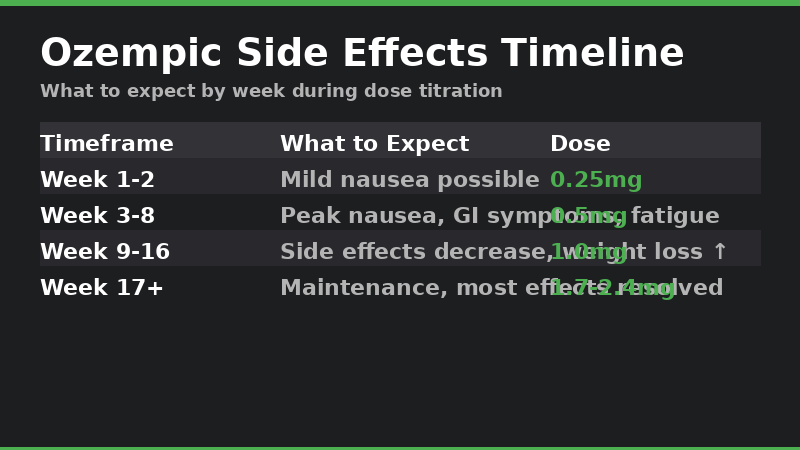
Side Effects Timeline: What to Expect by Week
| Timeframe | What to Expect |
|---|---|
| Week 1-2 (0.25mg) | Mild nausea possible. Most people tolerate the starting dose well. |
| Week 3-8 (0.5mg) | Peak nausea period for many users. GI symptoms most noticeable. Fatigue common. |
| Week 9-16 (1.0mg) | Side effects often decrease as body adapts. Weight loss accelerates. |
| Week 17+ (1.7-2.4mg) | Maintenance phase. Most initial side effects resolved. Focus shifts to long-term management. |
When to Call Your Doctor: A Quick Reference
| Symptom | Action |
|---|---|
| Mild nausea, manageable at home | Continue medication, use home remedies |
| Nausea preventing eating/drinking for 24h | Call doctor |
| Moderate diarrhea or constipation | Over-the-counter remedies, monitor |
| Severe abdominal pain | Emergency room |
| Signs of allergic reaction (rash, swelling, breathing difficulty) | Emergency room |
| Persistent vomiting | Call doctor |
| Vision changes | Call doctor (possible diabetic retinopathy complication) |
The Bottom Line
Most Ozempic side effects are mild to moderate, temporary, and manageable. The most effective strategy is:
- Start low, go slow — follow the standard titration schedule
- Eat strategically — smaller meals, less fat, more protein
- Stay hydrated — this alone prevents many side effects
- Communicate with your doctor — don’t suffer in silence
For the vast majority of users, the benefits of Ozempic — significant weight loss, improved blood sugar control, cardiovascular protection — outweigh the side effect burden once the initial adjustment period passes.
References
- Wilding JPH, et al. “Once-Weekly Semaglutide in Adults with Overweight or Obesity.” New England Journal of Medicine. 2021. PMID: 33567185
- Rubino D, et al. “Effect of Weekly Subcutaneous Semaglutide vs Daily Liraglutide on Body Weight in Adults With Overweight or Obesity.” JAMA. 2022. PMID: 35015037
- Wharton S, et al. “Gastrointestinal tolerability of once-weekly semaglutide 2.4 mg.” Diabetes, Obesity and Metabolism. 2022. PMID: 34514682
- FDA Adverse Event Reporting System (FAERS) Public Dashboard — Semaglutide, 2023-2026. fda.gov
Last reviewed: June 14, 2026